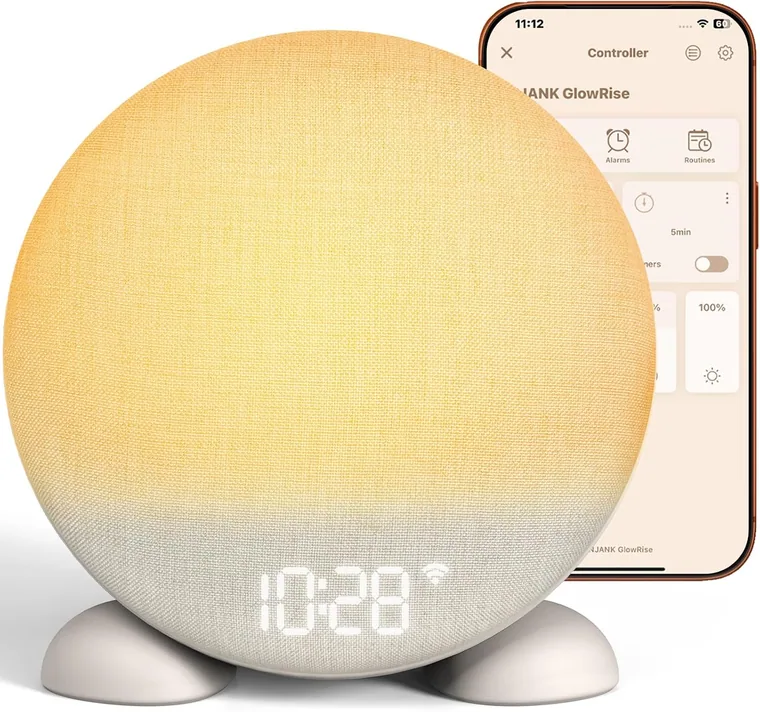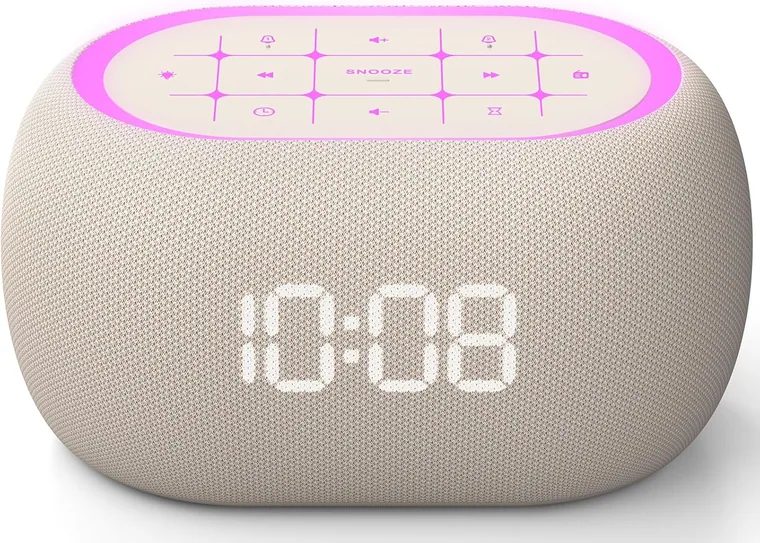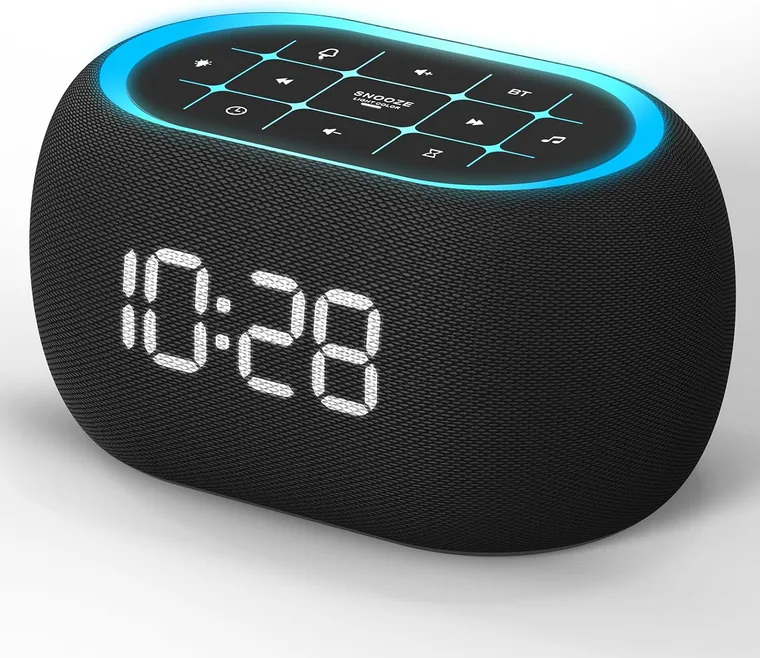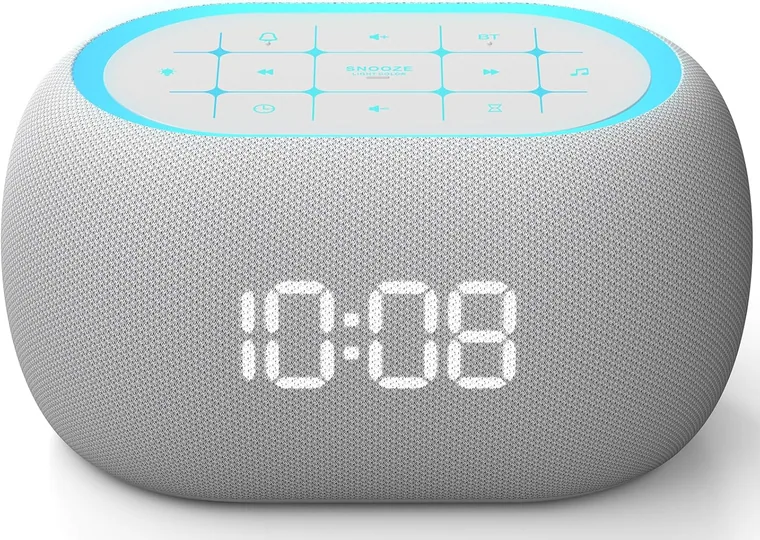
Bluetooth Sound Machine Alarm Clock, Grey
sound library 21 soundsalarm sounds 8night light 7 colours
$22.99
Guide
A sound machine is not a sleeping pill and a night light is not a lamp. Both are small tools with a narrow job, and both are easy to set wrong in ways that make a room worse.
ANJANK essentials include six of them, so we have read a great many reviews, including the ones that say we got something wrong. This guide is the short version of what we have learned, with the sources named and the numbers taken from our own catalogue.
The first misunderstanding is the important one. A sound machine does not cancel noise. It raises the floor, so that the gap between the quiet of a room and the bang of a door becomes smaller. The door still happens. It just stops being an event.
This is why steady sound works and interesting sound does not. A recording of rain is useful because nothing in it demands attention. A playlist is useless for the same reason a conversation is useless: the brain keeps checking what happens next.
It also explains the most common setup mistake. People turn the machine up until they cannot hear the street, which puts the machine itself at the level the street used to be. The target is not silence. The target is a quieter difference.
Every sound machine sold today lists white, pink and brown noise, usually without saying what separates them. The difference is where the energy sits.
| Label | Character | Sounds like | Good at masking |
|---|---|---|---|
| White | Even across all frequencies | Untuned radio, hiss | High sounds: keys, taps, dishes |
| Pink | Falls away with frequency | Steady rain, wind in trees | General street noise, most rooms |
| Brown | Falls away faster | Distant surf, deep rumble | Low sounds: traffic, a boiler, footsteps upstairs |
| Fan | A recorded machine | The fan you already own | People who grew up with one |
| Nature loops | Rain, waves, stream, birds | What the label says | Sleepers who dislike hiss |
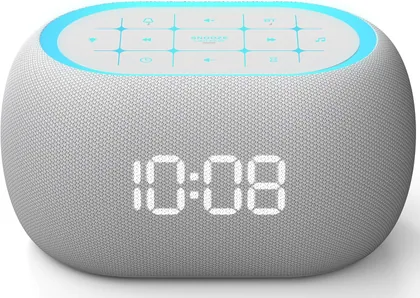
Most adults settle on pink or brown, and most people who say they hate white noise have only tried white. Our dome models carry twenty-one loops with five noise settings among them, so the test costs one evening rather than one purchase.
Volume and distance are one question, not two. Doubling the distance from a small speaker takes a large bite out of what reaches the pillow. A machine across the room at a moderate setting does the same work as a machine beside your head at a low one, and it puts less sound pressure at the ear.
In a nursery this matters more than anywhere. Put the machine on the far side of the room rather than on the cot rail, and set it low enough that you can hold a normal conversation over it. NIOSH gives a useful landmark for what a loud room feels like:
Sounds that are 85 dBA often require you to raise your voice to be heard by someone 3 feet away.
National Institute for Occupational Safety and Health, Noise and Hearing Loss, read 30 August 2026
If you have to raise your voice to talk over your own sound machine, it is louder than it needs to be, and it is louder than the room it is meant to cover.
For adults the same test works. Set the level while the noise you are masking is happening, not in a silent house at nine in the evening. Rooms are quiet at nine and loud at midnight.
Placement decides more than the model does. A sound machine wants to sit between you and the noise, not between you and the wall behind the bed, and it wants a hard surface rather than a folded towel, which eats the sound you paid for.
In a bedroom on a street, that means the machine goes near the window wall. In a flat with a noisy corridor, it goes near the door. In a nursery it goes across the room from the cot, at about the height of the cot rather than on the floor.
One more thing about surfaces. A small speaker on a hollow chest of drawers turns the furniture into part of the speaker, which adds a low boom you did not choose. A shelf with something on it, or a heavier surface, keeps the sound where it was designed to be.
Both approaches have a defence. Running all night keeps the floor steady, which helps in a room where the noise never stops, such as a flat on a main road. A timer means the room goes properly quiet once you are asleep, and nothing runs for eight hours next to your head.
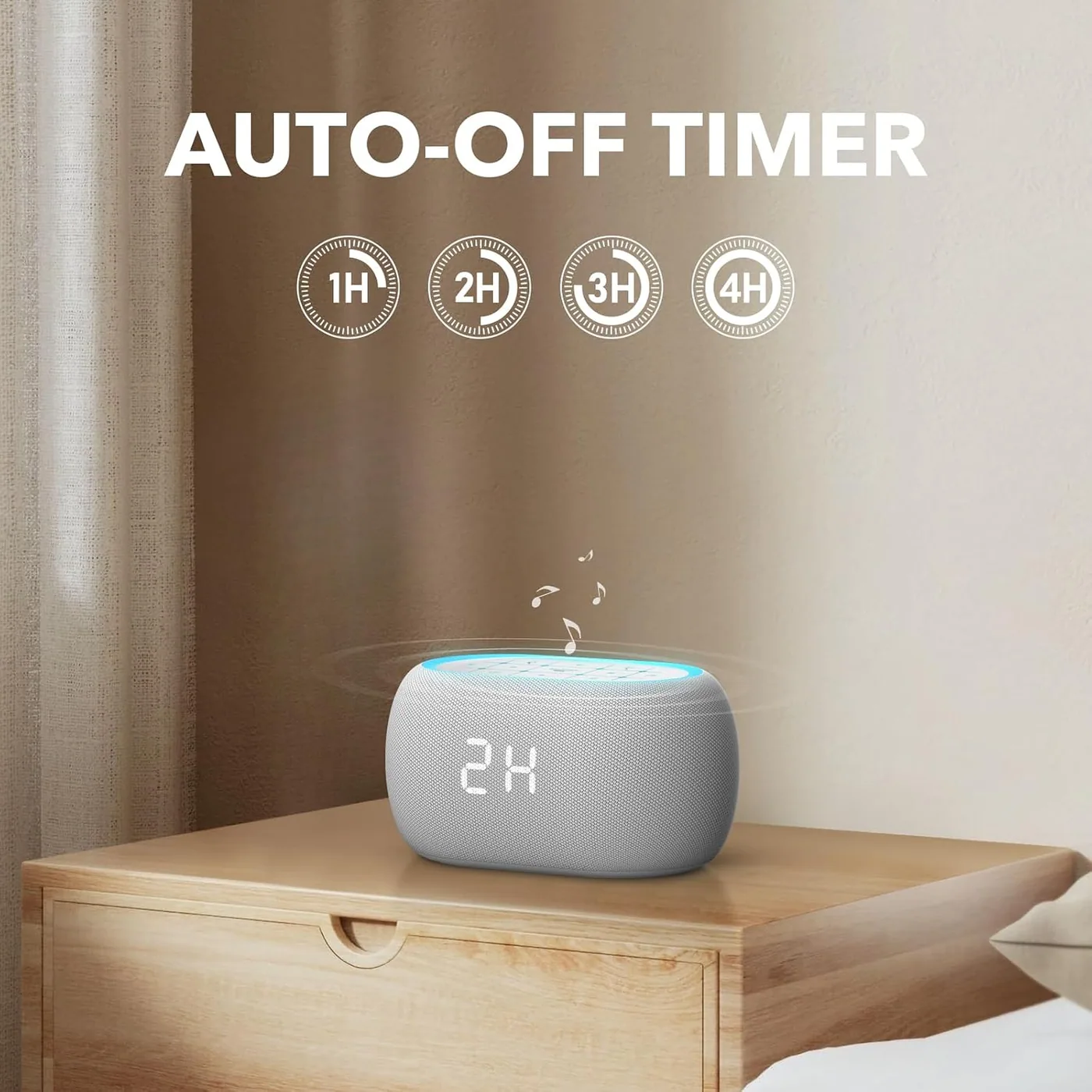
Our dome models offer one, two, three and four hour timers. The smart sunrise clock runs anything from one minute to twenty-four hours. If you are unsure, start with two hours: most people are past the stage where noise matters by then.
There is one case where all night wins outright. If a person or an animal moves through the house at four in the morning, a timer that ended at one is doing nothing at the moment you needed it.
There is a limit to masking and it arrives sooner than the marketing suggests. Sound covers other sound. It does nothing about a room that is too warm, a mattress that hurts, a phone that lights up, or a mind that starts a project at midnight.
It also cannot cover a bang. Impact noise from a floor above, a door slamming, a lorry over a manhole cover: these are short and loud, and a machine set high enough to hide them would keep you awake by itself. For those, the answer is the building rather than the bedside.
Knowing that in advance saves disappointment. A sound machine turns a scratchy, uneven night into a flat one. It does not turn a bad room into a good one.
Light is the other half of a bedroom, and it is governed by a clock in the brain rather than by preference. The National Institute of General Medical Sciences describes the driver in one line:
Light and dark have the biggest influence on circadian rhythms, but food intake, stress, physical activity, social environment, and temperature also affect them.
National Institute of General Medical Sciences, Circadian Rhythms, read 30 August 2026
And the mechanism that turns the evening into sleepiness in another:
In the evening, a person’s master clock tells their brain to make more melatonin, causing sleepiness.
National Institute of General Medical Sciences, Circadian Rhythms, read 30 August 2026
Two practical rules come out of that. Keep evening light low and warm rather than bright and blue, and keep the bedroom dark once the light is off. A night light is a compromise between those rules and the fact that people need to find a door at two in the morning.
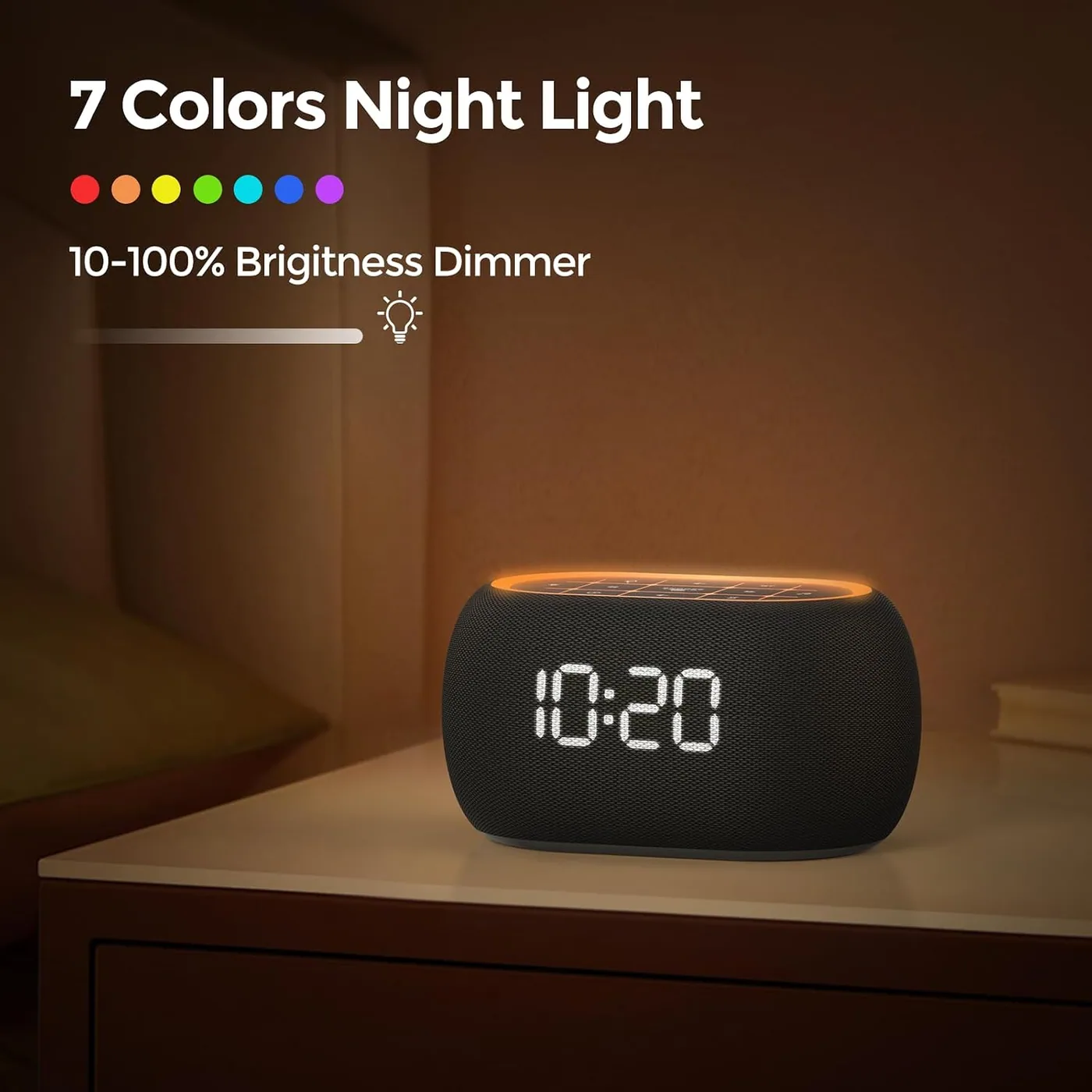
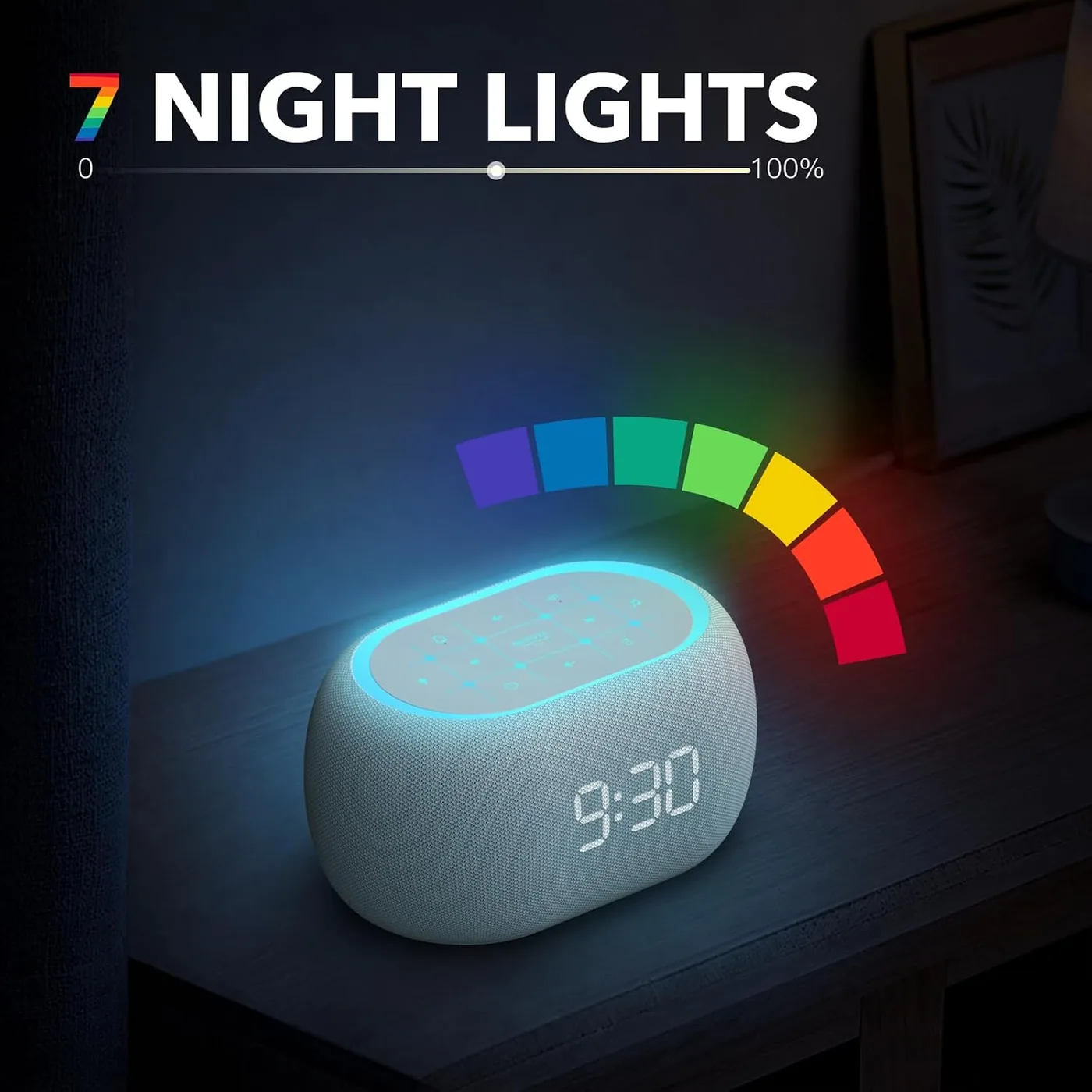
Our night lights carry seven or nine colours because rooms differ, but the useful advice is narrower than the feature list. Warm colours at the lowest step, red or orange if somebody has to get up regularly, and off if nobody does.
Every clock we make dims, and one of them does not dim far enough. The fabric clock radio glows through its mesh even at the lowest step, and an owner returned it for that reason. Her review stands on the sound machine department page and here as well:
But even on the lowest setting, the glow from the numbers was too bright for me.
We publish that because it is the single most common complaint about bedside clocks in general, and pretending our own line is exempt would be dishonest. The domes and the wooden cabinets dim to nothing. The fabric radio does not, and if a dark room matters to you, choose one of the others.
The opposite report is just as common, and it comes from owners who bought specifically for the dimmer:
wanted the lights to be dimmable so I can sleep in darkness but also be able to see the time when I wanted to.
The most common reason adults buy a sound machine has nothing to do with traffic. It is a partner who snores, and it is the case where masking earns its keep, because the noise is inside the room and cannot be moved.
Brown noise does more here than white, because snoring sits low. Position the machine on the sleeping side of the person being disturbed rather than in the middle of the room, and accept that a loud snore will still get through the top of a cycle.
One line we will not blur. If the snoring comes with pauses in breathing, gasping, or daytime sleepiness, that is a medical question and not an audio one. A sound machine that hides the symptom is the last thing that household needs.
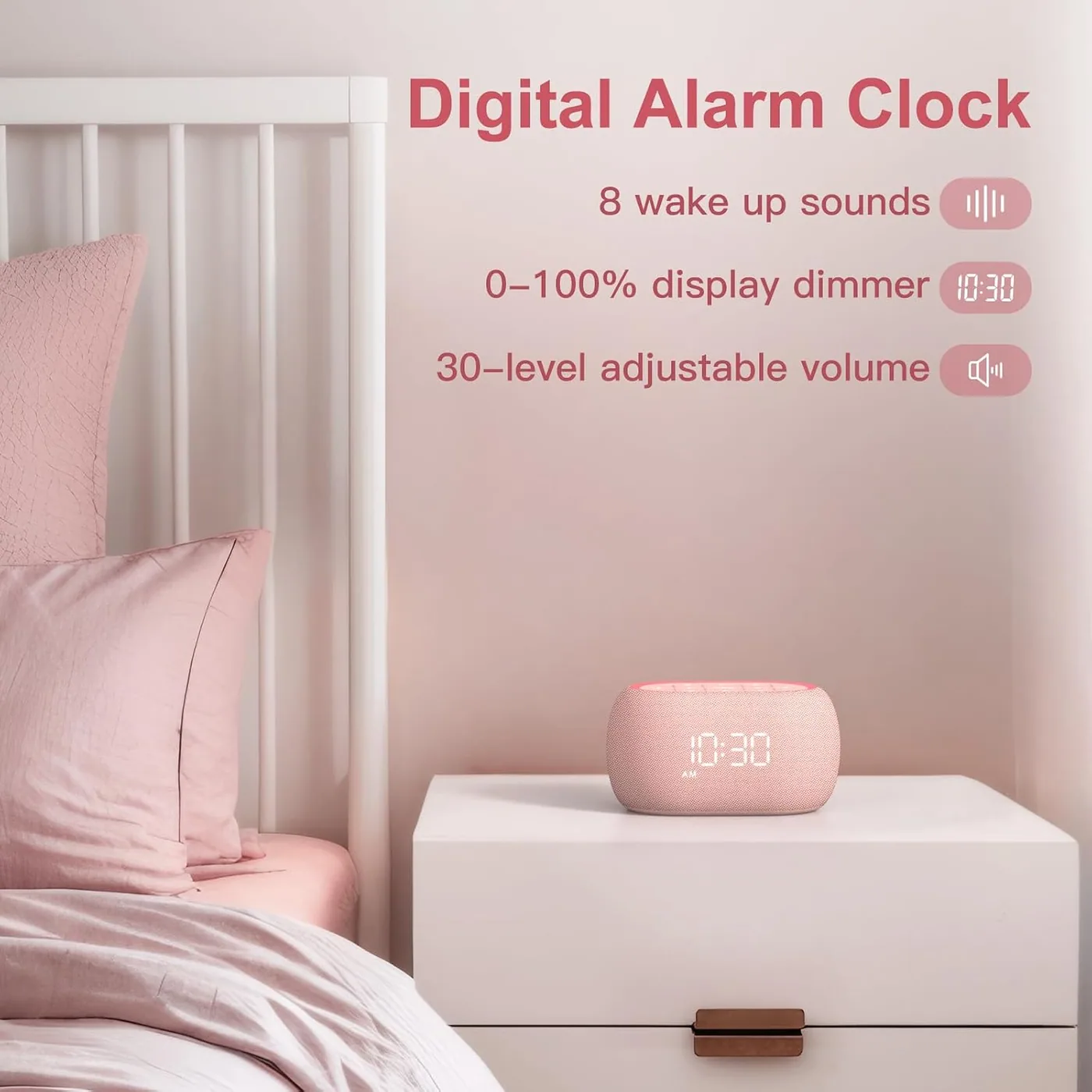
A night light in a child's room is doing a different job. It is not for the parent walking in, it is a signal the child can read. The most useful version of that signal is time, translated into something a four-year-old understands.
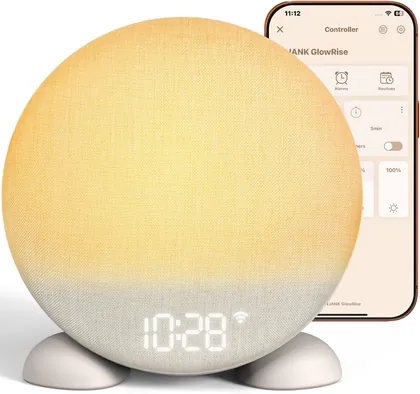
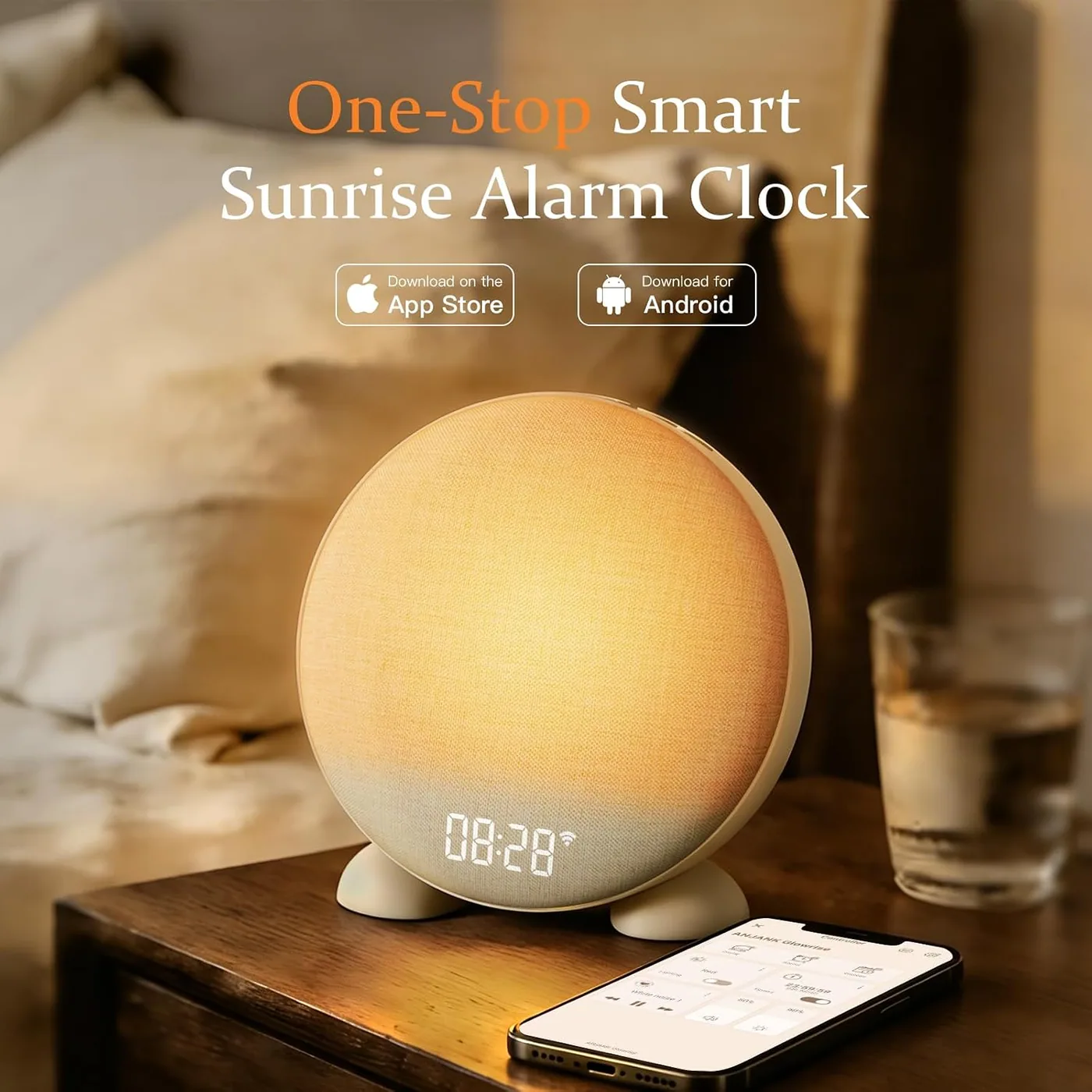
The smart sunrise clock does this with light: a colour for night, a colour for morning, and up to fifteen alarms so weekends can differ from school days. It is the model parents write to us about most.
So I took a chance on this one because it has an app for my phone, even though its more than I wanted to spend on a clock...
Two cautions. Set it up before the child sees it, because a new light in a bedroom is entertainment for an hour. And keep the sound library modest at first. Twenty-five options is a menu for an adult and a toy for a child. If the child sleeps through the morning rather than ahead of it, the bed shaker clocks are the other half of that problem.
Three ways to get sound out of a bedside device, and they suit different people.
Built-in loops are the reliable option. They start when the machine starts, they do not depend on a phone, and they cannot be interrupted by a notification. For sleep, this is the one that works.
Bluetooth is for the hour before sleep rather than for sleep itself. Our dome models take a phone and play through a dual-driver speaker, and one honest limitation turns up in reviews: the link is designed for a bedside, not a house, so a phone two rooms away will drop it.
The white noise options are disappointing, and the overall sound quality isn’t very good.
FM radio is the third route and it belongs to the wooden cabinets. It is the choice of people who fall asleep to a station rather than to rain, and it comes with the tuning problem we describe on that department page.
Anything that runs eight hours a night for years has a maintenance story, even if it is a short one. Fabric grilles collect dust and go quiet in the high frequencies. A wipe with a dry brush every few months keeps a dome sounding as it did.
Buttons matter more than they look. A touch panel on top of a machine will be pressed by a cat, a sleeve or a book at some point, and the ones that respond to a firm press rather than a brush are the ones that survive a bedroom.
And a note on power. These devices draw little, but they draw it constantly. A machine on a switched socket that goes off with the room lights is a machine that will not be running when you need it at two in the morning. A charging dock has the same habit and the same fix.
None of this outranks the basics, and it would be strange for a company selling sound machines to pretend otherwise. The CDC keeps the list short:
Keeping your bedroom quiet, relaxing, and at a cool temperature.
Centers for Disease Control and Prevention, About Sleep, read 30 August 2026
Quiet, dark, cool. A sound machine helps with the first when quiet is not available, a night light is a controlled leak in the second, and neither one does anything at all about the third. Set the room first, then buy the tool for the part you cannot fix.
The other half of the CDC list is the timetable, and it is the part nobody wants to hear:
Going to bed and getting up at the same time every day.
Centers for Disease Control and Prevention, About Sleep, read 30 August 2026
Nobody gets the settings right on the first night, and treating it as a week of small adjustments works better than treating it as a purchase.
The department covers three rooms: a nursery, a city bedroom and a guest room with a radio in it. This table is the fastest way to see which is which.
| Model | Sound | Night light | Timer | Display at night |
|---|---|---|---|---|
| Bluetooth Sound Machine, Grey | 21 loops, Bluetooth, dual 10W | 7 colours, 0-100% | 1-4 hours | Dims to zero |
| Compact Sound Machine, Black | 21 loops, Bluetooth | 7 colours, 10-100% | 1-4 hours | Dims to zero |
| Hi-Fi Sound Machine, White | 21 loops, hi-fi drivers | 7 colours, 10-100% | 1-4 hours | Dims to zero |
| Hi-Fi Sound Machine, Pink | 21 loops, hi-fi drivers | 7 colours, 10-100% | 1-4 hours | Dims to zero |
| Fabric Clock Radio, Latte | 8 tones, FM radio | 7 colours, 0-100% | Sleep timer | Glows at lowest step |
| Smart Sunrise Clock, Grey | 25 loops, 5W stereo | Full colour, app | 1 minute to 24 hours | Dims to zero |
Reading two thousand reviews of our own sound machines, three arguments come back. It is worth knowing what they are before you buy, because they are all about taste rather than defects.
The first is the quality of the loops. Some owners find our nature recordings warm, and some find them thin. That split runs through every brand in this category, and the honest answer is that a five-dollar difference in a driver is audible at three in the morning.
The second is the interface. Twenty-one sounds, seven colours and a dimmer add up to a device with a learning curve, and owners who read the card in the box are happier than owners who did not. The third is Bluetooth range, which is a bedside link on all of our models rather than a whole-house one.
The first is a home office. A sound machine on a desk covers a corridor and a kitchen, and it does it better than music because there is nothing in it to follow. Set it lower than you would at night: at a desk you want a floor, not a blanket.
The second is sleeping in the daytime after a night shift. This is the hardest room in the house, because the world outside is fully awake and the light is fighting you as well. Masking helps with the deliveries and the neighbours. It cannot help with the light, and blackout is the part of that job worth spending on first.
For shift sleepers the timer is usually a mistake. The interruptions arrive in the afternoon, which is exactly when a two-hour timer will have finished.
Those questions apply to anything on the shelf. We answer them for our own models on each department page, including where the answer is no.
One last note about the loops themselves. A sound you like at bedtime and a sound that works all night are often different, and the second one is always the duller of the two. Rain on a window is pleasant for ten minutes; steady rain with no thunder in it is what carries you through to morning.
Buy for the noise you actually have. A flat on a main road wants brown noise running all night from a machine with a real speaker. A nursery wants a low setting across the room and a timer. A guest room wants a radio and a display that goes dark.
And if the room is already quiet and dark, save the money. The best sound machine in a quiet bedroom is a switched-off sound machine.
If the alarm is what fails rather than the room, the guide to waking a heavy sleeper covers vibration, light and distance, with the safety line we do not cross. If the noise you want covered is your own timer at six in the morning, the guide to training by the clock covers volume steps and mounting. The models here live in the sound machine department, and the radios in the wooden line.
This guide is general information about equipment, not medical advice. For sleep, hearing or training questions that affect your health, talk to a clinician.
From the range
The models this guide is about.