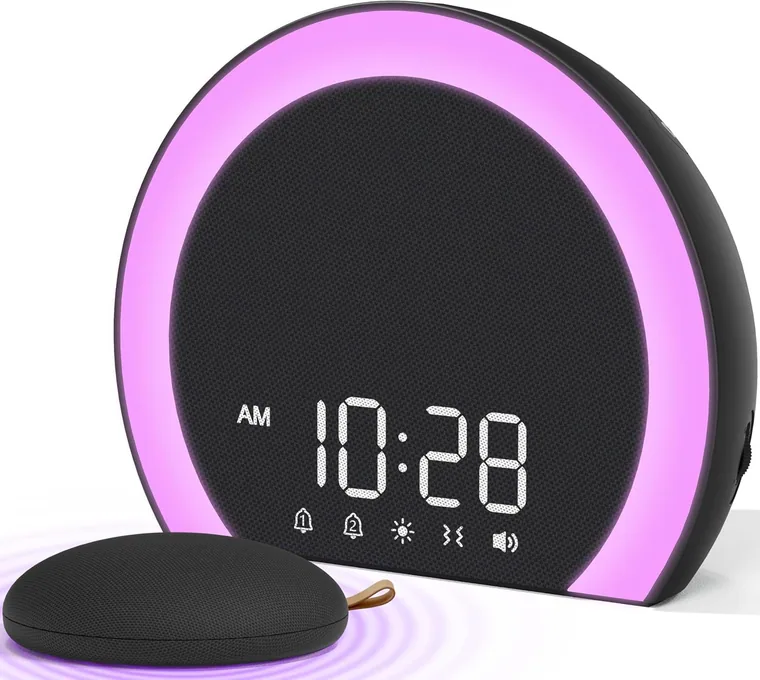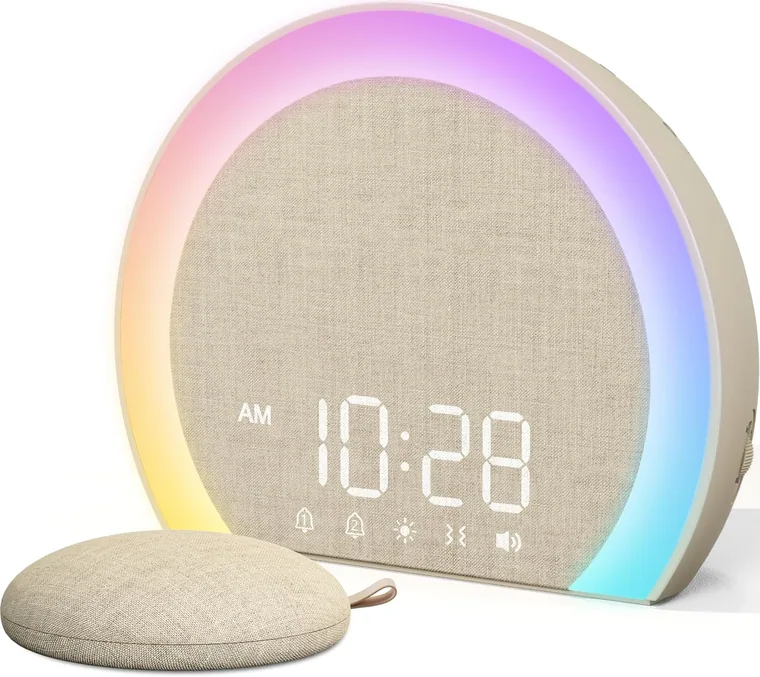
Extra Loud Bed Shaker Alarm Clock, Latte
shaker range 32.8ftshaker battery 1500mAhalarm sounds 8
$41.99
Guide
Missing an alarm is not a character flaw. It is a mismatch between one weak signal and a brain that has decided, for the moment, not to listen. Fixing it is mostly engineering.
Every week somebody writes to us about the same morning. The alarm went off, it ran for an hour, and they woke up to a silent room and a phone with the alarm switched off in their hand. They do not remember doing it. They are not lying, and they are not unusual.
This guide is about the four things that can actually move a sleeping person, what each one is good for, and how to combine them without turning a bedroom into a fire drill. It cites public sources by name, and it uses the ANJANK lineup for the numbers because those are the numbers we can check.
A conventional alarm asks one sense to do all the work, at a moment when that sense is at its least useful. Three things stack up against it.
First, depth. In the deepest stage of sleep the threshold for waking rises sharply, and a sound that would be obvious at midday is filtered out. Second, habituation. A tone heard every morning for a year stops being a surprise, and the same recording becomes wallpaper. Third, hearing. Loss in the higher frequencies is common and often unnoticed, and most cheap alarms sit exactly there.
The National Institute on Deafness and Other Communication Disorders describes the answer in one sentence, and it is the sentence this whole department is built on.
Alerting or alarm devices use sound, light, vibrations, or a combination of these techniques to let someone know when a particular event is occurring. Clocks and wake-up alarm systems allow a person to choose to wake up to flashing lights, horns, or a gentle shaking.
National Institute on Deafness and Other Communication Disorders, Assistive Devices for People with Hearing, Voice, Speech, or Language Disorders, read 30 August 2026
Sound, light, vibration, or a combination. That is the whole toolbox, and the interesting question is how much each tool is worth to you.
There is a second problem behind the first one. Waking is not a switch, it is a slope, and for the first stretch after a deep sleep stage the parts of the brain that make decisions are slower than the parts that reach out and press things. That is why turning off an alarm can happen without any memory of it afterwards.
This has a practical consequence. A wake-up system has to survive a person who is technically awake and not yet competent. Anything that can be silenced by a single soft tap will be silenced. Anything that requires standing up, or that keeps running in a second channel, tends to survive.
It also explains why people who miss alarms often report the opposite problem on holiday. Without a debt of sleep behind them, the same alarm works on the first sound. The alarm did not change. The slope did. How the room itself feeds that debt is the subject of our guide to sound and light.
Manufacturers print decibel numbers because they are easy to print. They mean less than they look. A figure measured at four inches from the speaker has little to do with what reaches a pillow across a room, and the peak of an alarm tone matters less than whether it rises or arrives at full volume.
Two rules survive contact with a real bedroom. Gradual beats sudden for anyone who shares the room, because the second person wakes at a lower level than the sleeper being targeted. And a graded set of sounds beats one loud tone over months, because habituation takes longer to set in when the sound changes.
There is also a limit worth respecting. NIOSH sets its occupational exposure limit at a level most people can picture:
NIOSH established a recommended exposure limit (REL) of 85 A-weighted decibels (dBA) averaged over an eight-hour workday.
National Institute for Occupational Safety and Health, Noise and Hearing Loss, read 30 August 2026
That figure describes a workday, not a thirty-second alarm, and nobody is damaging their hearing with a bedside clock. It is a useful yardstick all the same. If the alarm is loud enough that you flinch and the household complains, the problem has stopped being volume and has become the wrong lever.
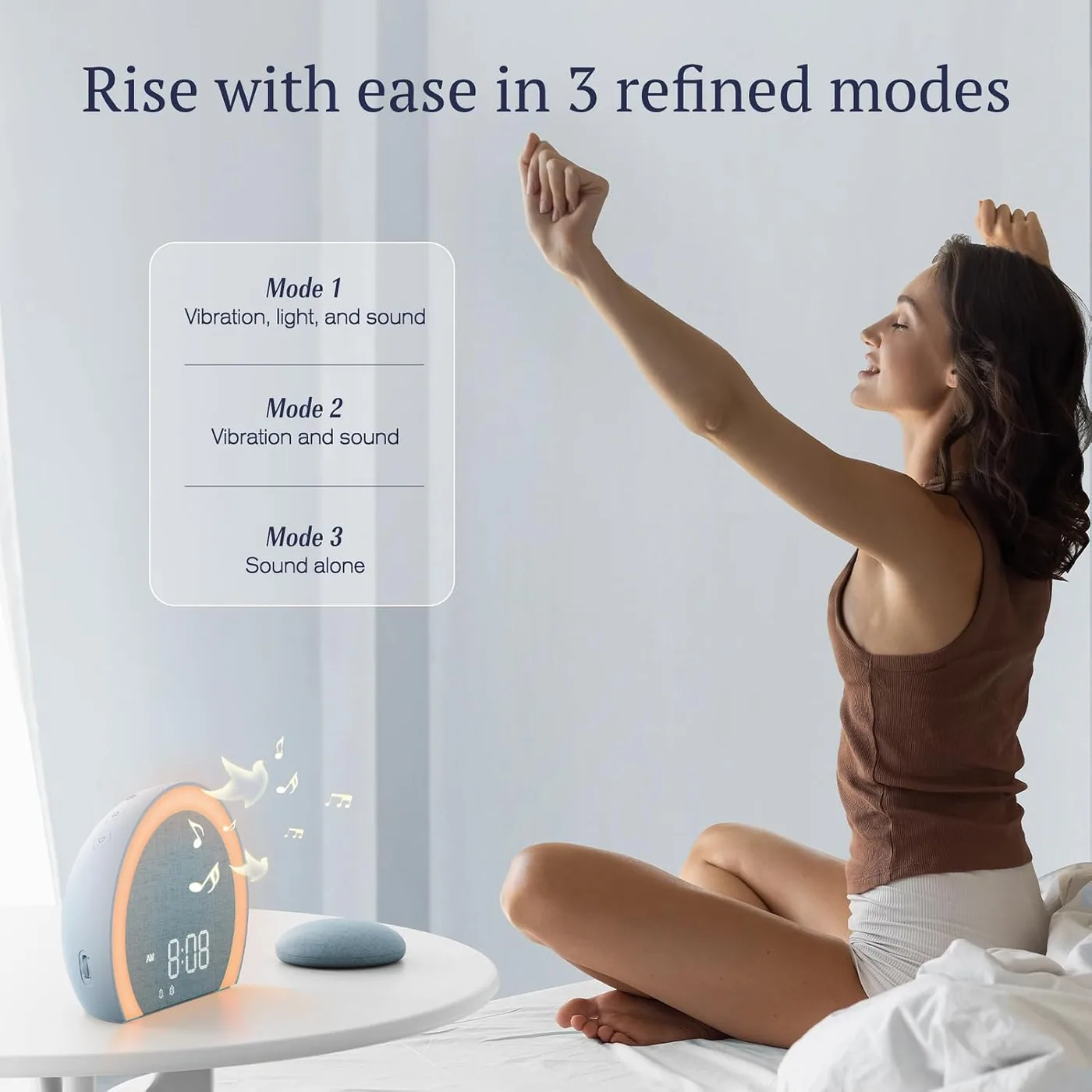
Think of waking as a budget. You have four levers and each one costs something: noise for the household, light in a dark room, hardware under the pillow, or the effort of getting out of bed to reach the clock.
| Lever | Reaches | Costs you | Best for |
|---|---|---|---|
| Sound | Anyone in earshot | Wakes the whole room | Sleepers with normal hearing and a room of their own |
| Vibration | Only the person on that pillow | Hardware in the bed | Shared beds, hearing loss, earplugs |
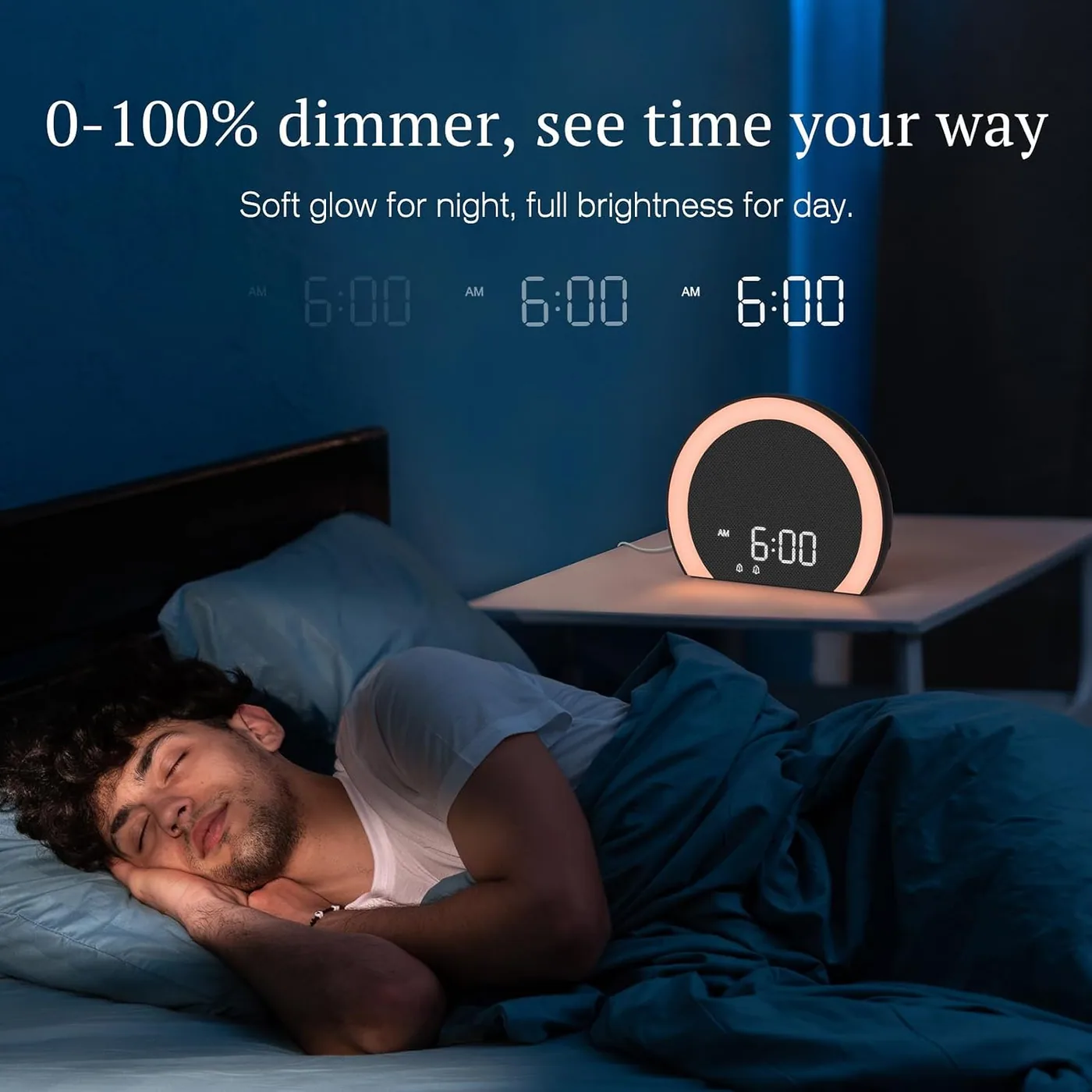
| Light | Eyelids, gradually | Nothing, if it ramps | Dark rooms and winter mornings |
| Distance | Your legs | Getting up in the cold | Snooze habits nothing else breaks |
Most people who have failed with alarms have only tried the first lever, louder. Louder works until it does not, and then it stops working permanently, because the household starts negotiating about it.
A shaker is a small motor in a puck that goes under the pillow or between the mattress and a topper. When the alarm fires, the mattress moves. It is local, so it does not wake a partner across the bed, and it works through earplugs and through hearing loss.
Three details decide whether it works for you. Placement: on top of a nightstand it buzzes uselessly, and under a pillow it moves your head. Power: our current shakers hold a 1500 mAh cell that lasts around a month of daily alarms, and they charge by magnet or USB-C. Range: the wireless link runs to 32.8 feet, which matters if the clock sits on a dresser rather than beside the bed.
The failure people report is rarely the vibration itself. It is the puck sliding out from under a pillow at three in the morning. A pillowcase with the puck inside it, or a topper holding it in place, ends that problem for good.
Light works on a different timescale. It does not startle you awake, it changes the state you wake up from, and the mechanism is not folklore. The National Institute of General Medical Sciences puts it plainly:
In the evening, a person’s master clock tells their brain to make more melatonin, causing sleepiness.
National Institute of General Medical Sciences, Circadian Rhythms, read 30 August 2026
Run that backwards and you have the sunrise alarm: light that climbs over twenty or thirty minutes tells the same clock to stop making melatonin, so the alarm sound arrives at a body that is already halfway up. In a bedroom with blackout curtains, this is the lever that changes the most.
It has limits. A sunrise light cannot compete with a genuinely dark winter morning if the ramp is too short, and it does nothing at all for a sleeper who buries their head. Use it with sound, not instead of it.
Light and dark have the biggest influence on circadian rhythms, but food intake, stress, physical activity, social environment, and temperature also affect them.
National Institute of General Medical Sciences, Circadian Rhythms, read 30 August 2026
Putting the clock across the room is old advice and it survives because it is effective. The catch is that it only works while the walk is long enough to finish waking you, and a clock on a dresser five feet away is a clock you can reach with one arm and a lean.
The combination that holds up over months is a clock out of arm's reach with a shaker in the bed. The vibration starts the process, the walk finishes it, and neither one depends on volume.
We collect reviews of our own products and we read the low ones first. Two patterns come back often enough to publish.
As a nursing student, sometimes there are long days where I can’t hear my phone go off.
The first pattern is that people who work irregular hours are the heaviest users. Nurses, students, shift workers and teenagers turn up again and again, and what they want is not a louder tone but a second channel that works when they are exhausted.
This was the 3rd of these I have purchased since 2019. I have bought one about every year or so, because the sound feature eventually stops working.
The second pattern is a failure we had to fix. On the early shaker clock, the speaker could stop working after a year or two while everything else kept running, and the owner would find out by sleeping in. The current models moved the alarm to a front-facing driver, and the shaker no longer shares a power path with it.
An alarm clock is an alerting device. A smoke alarm is a life-safety device, and they are not interchangeable, whatever the vibration under your pillow is doing at seven in the morning.
If sound does not reliably wake you, that is exactly the situation fire services plan for. The U.S. Fire Administration is direct about it:
If you are deaf or hard of hearing, use smoke alarms with a vibrating pad, flashing light or strobe light. These accessories start when your alarm sounds.
U.S. Fire Administration, Fire Safety for People with Disabilities, read 30 August 2026
Their smoke alarm page repeats the point for anyone with hearing loss, and it is worth reading before you buy anything at all:
There are also alarms for people with hearing loss. These alarms may have strobe lights that flash and/or vibrate to alert those who are unable to hear standard smoke alarms when they sound.
U.S. Fire Administration, Smoke Alarms, read 30 August 2026
So: buy the alerting accessory that is listed for your smoke alarm, and treat the bedside clock as what it is. Our shakers are built to move you at a chosen time. They are not connected to a detector and they will not know that anything is burning.
A wake-up that only works when you are rested is not a wake-up. The version below survives four hours of sleep, which is the test that matters.
The CDC keeps the boring half of this list, and it is the half that decides how hard the alarm has to work in the first place:
Going to bed and getting up at the same time every day.
Centers for Disease Control and Prevention, About Sleep, read 30 August 2026
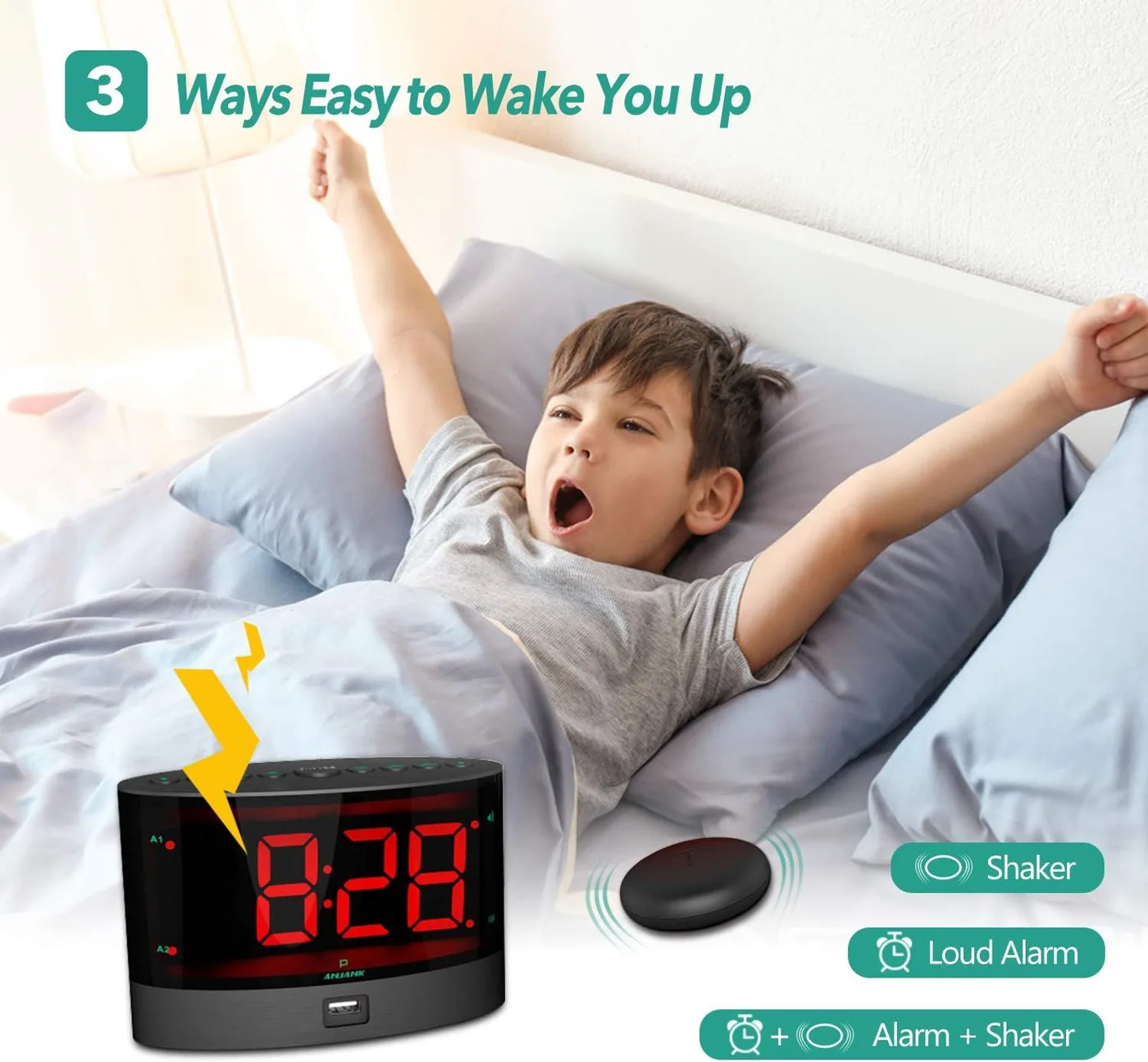
A large share of the shaker clocks we sell are bought by parents, and the reason is always the same. The teenager sets a phone alarm, sleeps through it, and a parent two rooms away wakes up instead and walks down the corridor. The household has one alarm clock and it is a person.
Vibration solves this better than volume, because volume in a shared house is a negotiation with everybody else. A puck under one pillow wakes one person, and the argument about noise at six in the morning never starts.
Two practical notes from parents. Put the clock where the teenager cannot reach it without sitting up, and set the second alarm fifteen minutes after the first rather than five. Five minutes is inside the slope described above, and it gets absorbed.
Snooze is not free. Each cycle starts a fresh descent, and the sleep you get in nine-minute pieces is broken by design. People who snooze four times do not gain thirty-six minutes of rest, they trade the last half hour of useful sleep for a longer climb out of it.
If you cannot give up the button, at least make the last alarm the real one. Set the first alarm at the time you would actually like to be up, keep the gap wide, and put the shaker on the final alarm rather than the first. It is a small change and it reorders the whole morning.
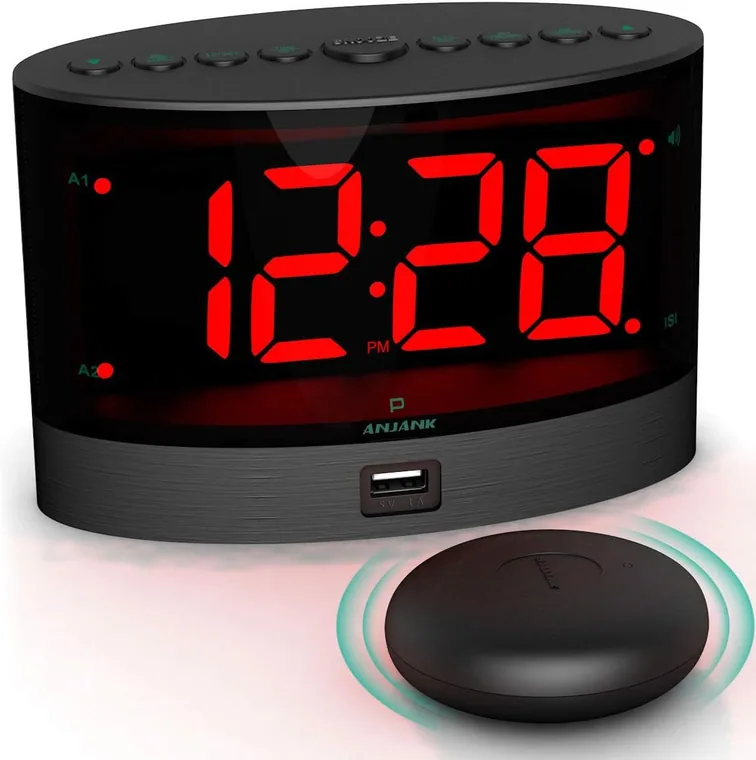
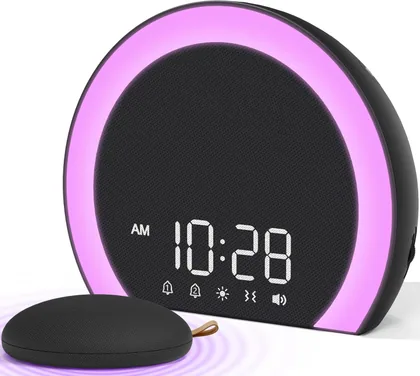
On our round shaker clocks the two alarms are set on separate dials, which makes this arrangement easy to hold in your head at night. On the older red model there are also two alarms, and one owner uses exactly this pattern:
This was the 3rd of these I have purchased since 2019. I have bought one about every year or so, because the sound feature eventually stops working.
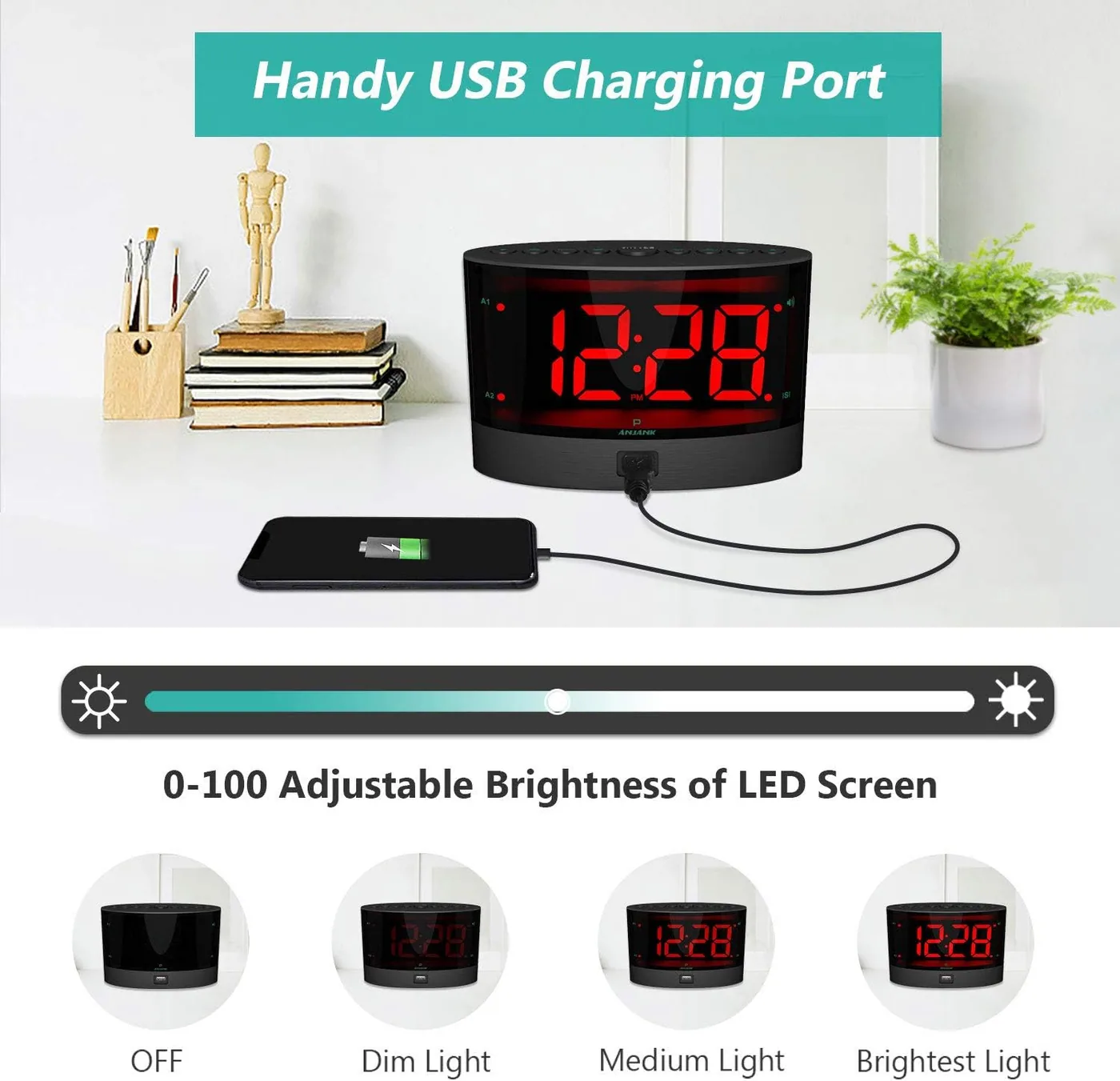
The most annoying failure in this category has nothing to do with the alarm. The power goes off for ten minutes at two in the morning, the clock resets to midnight, the alarm never fires, and nobody finds out until it is too late.
Our descriptions state where a model has no battery backup, and the extra loud shaker clocks are in that group. They need mains power and the adapter is in the box. If your street loses power often, either pick a model with a backup cell or keep a second alarm on a phone as a safety net.
The shaker itself is a separate story. It runs from its own rechargeable cell, so a power cut does not empty it, and a month of daily use between charges is the figure our current models are built around.
This is the case where the levers stop being interchangeable. One person needs to be up at half past five, the other at eight, and the room is shared. Sound is the wrong tool: it does not aim.
The arrangement that works is vibration for the early riser, sound for the later one, and the display dark for both. Every clock in this department can be set that way, because the shaker fires on a chosen alarm rather than on all of them.
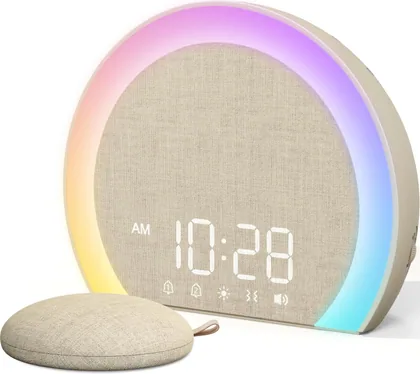
The night light matters here too. Getting up at half past five in a room where somebody else is still asleep is easier with one dim colour than with a phone screen, and easier again if the colour is warm rather than white. The sound machines carry the same seven colours on a bigger dome.
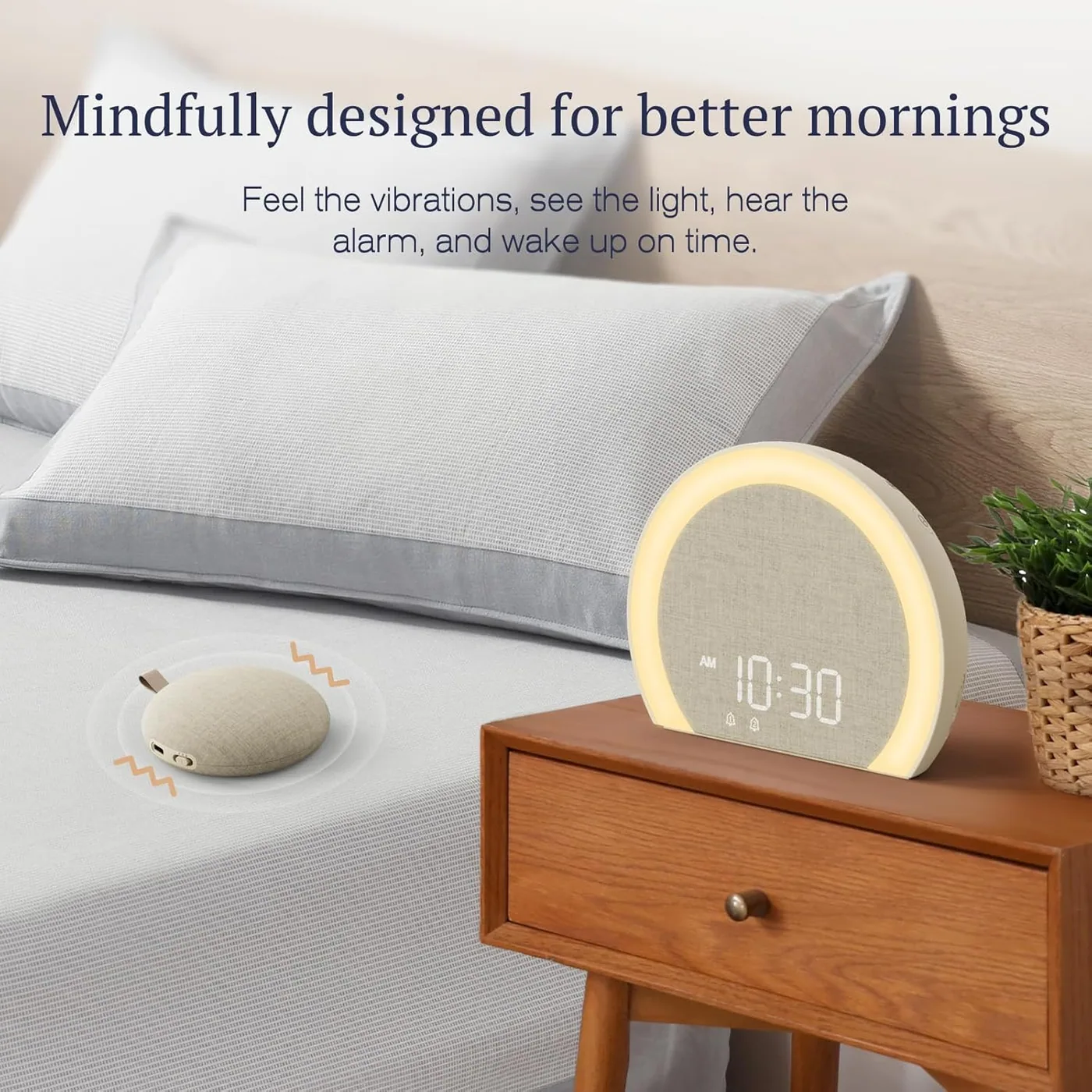
Four bed shaker clocks sit in the ANJANK bedside lineup, and the differences between them are small and specific. They matter mostly to the person who has to look at the display all night.
| Model | Shaker | Alarm sounds | Night light | Display at night |
|---|---|---|---|---|
| Bed Shaker Alarm Clock, Red | Wireless, 32 ft | Buzzer, two alarms | None | Red LED, dimmable |
| Extra Loud, Latte | Wireless, 32.8 ft, ~1 month | 8 graded sounds | 9 colours, 6 steps | Fabric front, softest |
| Super Loud, Black | Wireless, 32.8 ft, ~1 month | 8 graded sounds | 9 colours, 6 steps | Gloss face, brightest |
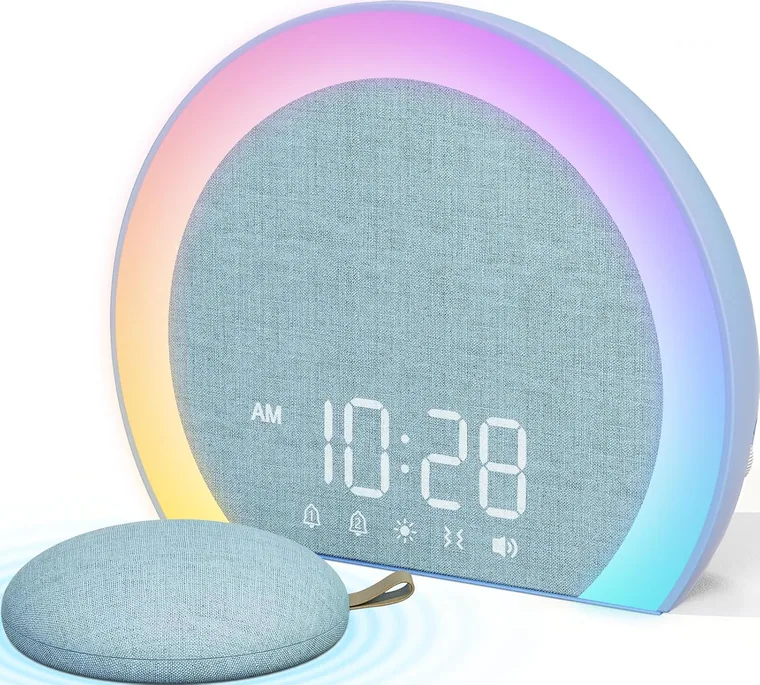
| Super Loud, Blue | Wireless, 32.8 ft, ~1 month | 8 graded sounds | 9 colours, 6 steps | Fabric front, cool tone |
These are the questions we would ask in a shop, in the order that saves the most money.
None of those questions is about brand. Ask them of anything on a shelf, including ours.
Some mornings are not an alarm problem. If you wake unrefreshed after eight hours, if a partner reports that you stop breathing in the night, or if daytime sleepiness is bad enough to be dangerous behind a wheel, that belongs with a doctor rather than with a shopping list.
The same goes for hearing. If sound alarms have stopped working for you in general, and not only at six in the morning, a hearing check is a better first step than a louder buzzer. Assistive alerting equipment exists for exactly this, and it is designed and listed for the job in a way a bedside clock is not.
Four clocks are the wrong buy for somebody who needs one appointment.
If you have never used vibration, start there, because it is the lever most people have never tried and the one that changes the most. If you already use it and still sleep through, add distance before you add volume.
And if the honest answer is that you are sleeping five hours a night, no clock in this range will fix that. The alarm is the last stage of a process that began the evening before, and every hour you can move it earlier is worth more than any feature we sell.
If the room itself is the problem rather than the alarm, the guide to sound and light covers masking, night lights and the models that do both. If the clock you actually need is one you can read across a garage, the guide to training by the clock covers digit height, interval formats and where our timers fall short. The models in this guide live in the bed shaker department.
This guide is general information about equipment, not medical advice. For sleep, hearing or training questions that affect your health, talk to a clinician.
From the range
The models this guide is about.